
The Climate Case for a Retro-fit: Why Your Air-conditioning Matters Now
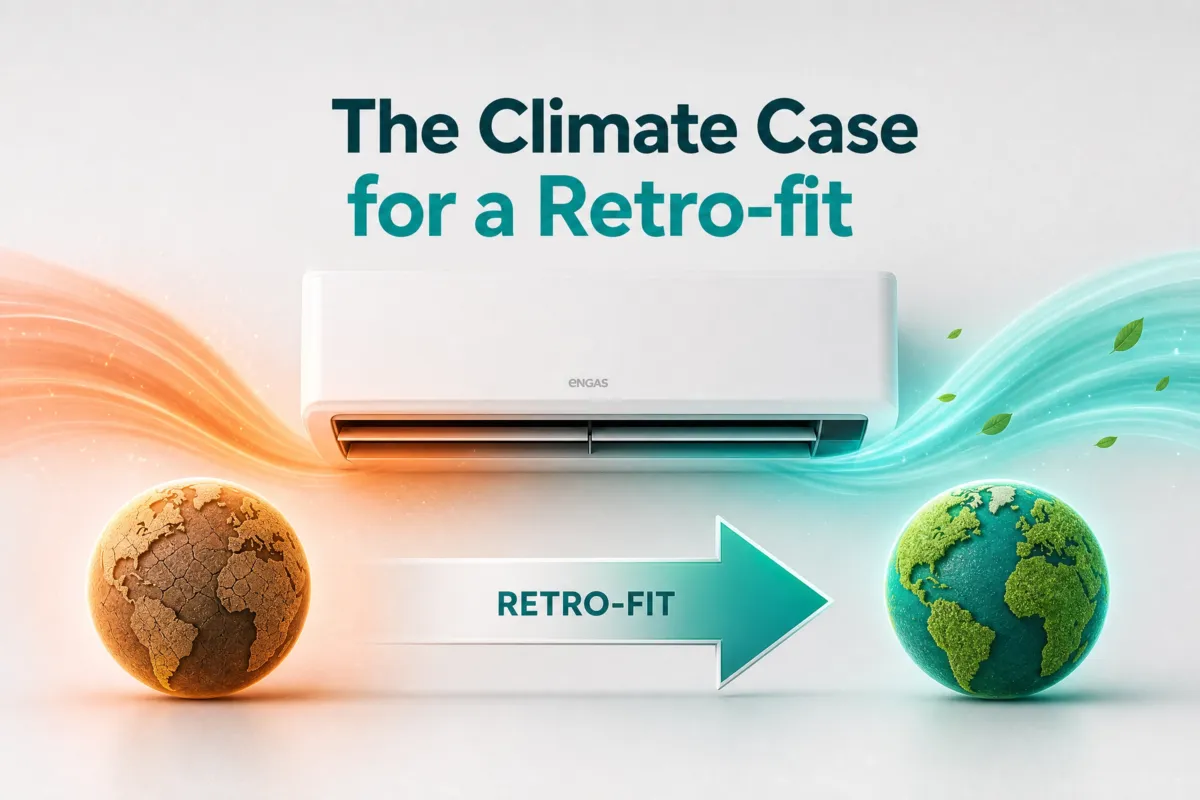
In Perth, we are no strangers to the heat. As our summers grow longer and our heatwaves become more intense, the way we cool our homes has never been more important. While we often focus on the efficiency of our Air-conditioner units or the size of our electricity bills, there is a much bigger picture at play: the impact of our Air-conditioning on the planet.
At Engas, we believe that staying comfortable shouldn't come at the cost to the environment. Our Retro-fit service replaces the man-made chemical refrigerant inside your existing Air-conditioner unit with a natural blended hydrocarbon refrigerant, cutting energy use across both cooling and heating for the life of the Air-conditioner.
Here is why making the switch is one of the most effective steps you can take on climate change today.
A Century of Warning Signs
Climate change can feel like a modern headline, but the warning signs have been on the public record for more than a century. On 2 November 1922, The Washington Post published an Associated Press report from Bergen, Norway, describing an Arctic that was already changing:
“The Arctic ocean is warming up, icebergs are growing scarcer and in some places the seals are finding the water too hot... Reports from fishermen, seal hunters and explorers all point to a radical change in climate conditions and hitherto unheard-of temperatures in the Arctic zone.”
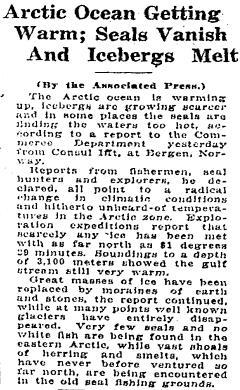
That report is now 104 years old, and the trend it described has only accelerated. According to CSIRO and the Bureau of Meteorology, Australia has warmed by an average of 1.51°C since 1910, and the number of very hot days each year has increased sixfold compared to the middle of last century. The oceans tell the same story: sea surface temperatures around Australia have risen by 1.08°C since 1900.
What Climate Change Means for Australia
The evidence gathered by Australia's leading science bodies is consistent, and much of it hits close to home in Western Australia:
- Heatwaves are now the leading natural hazard for human mortality in Australia, with the elderly, children and outdoor workers most at risk (Australian Geographic).
- Southern and southwestern Australia, including Perth, are experiencing longer and more severe droughts as rainfall declines (CSIRO).
- Fire seasons are lengthening and extreme fire weather is becoming more frequent (CSIRO and the Bureau of Meteorology).
- Disaster-related losses are projected to reach A$73 billion a year by 2060 if emissions stay high (Australian Geographic).
The World Health Organisation (WHO) treats climate change as a health issue, not just an environmental one. The first of WHO's three climate objectives is to promote actions that both reduce carbon emissions and improve health, supporting a rapid and fair transition to a clean energy economy.
For Perth homeowners, the connection is direct. Hotter summers mean our Air-conditioner units work harder and run longer, right when the electricity grid is under the most pressure. That makes the refrigerant inside your Air-conditioner unit, and the energy it draws, a genuine climate decision.
The Hidden Impact of Man-made Chemical Refrigerants
Most modern Australian homes rely on man-made chemical refrigerants, such as R410A or R32. While these gases are effective at moving heat, they carry a hidden environmental price tag. These chemicals have what is known as a high Global Warming Potential (GWP).
To put it into perspective, just one kilogram of R410A, a common refrigerant in many home Air-conditioner units, has the same greenhouse impact as approximately two tonnes of carbon dioxide. That is the equivalent of driving a typical car for thousands of kilometres. When these Air-conditioner units leak, and research shows that refrigerant leaks in Australia accounted for nearly 7 million tonnes of CO2e emissions in 2022, the impact on our atmosphere is significant.
In contrast, Engas natural blended hydrocarbon refrigerant has a GWP of less than 1. It is a natural, non-toxic solution that performs the same job without the heavy environmental footprint.
Efficiency: A Two-Fold Win for the Environment
Climate change isn't just about what happens when an Air-conditioner unit leaks; it is also about the energy required to run it. Every time you turn on your Air-conditioner, you are using electricity, which in Western Australia still largely relies on carbon-intensive sources.
By choosing a Retro-fit, you are tackling both sides of the climate equation:
- Direct emissions: you replace high-GWP man-made chemical refrigerants with a natural alternative.
- Indirect emissions: based on our own research and development (16 years), Engas can deliver an estimated 25% to 40% electricity savings across both cooling and heating.
When your Air-conditioner unit runs more efficiently, it uses less power, which means fewer emissions from our power grid. It is a rare “win-win” where you can lower your carbon footprint while also lowering your household running costs, and the benefit lasts for the life of the Air-conditioner.
The Urgency to Act: The Phase-Down is Here
There is a real urgency to look at your Air-conditioning sooner rather than later. Australia is currently in the midst of a mandatory HFC phase-down, committed under international treaty to reducing the import of man-made chemical refrigerants by 85% by 2036.
We are already seeing the effects of this transition. As the supply of older man-made chemical refrigerants such as R22 and R32 shrinks, the cost to service and top up older Air-conditioner units is rising. While there is no legal obligation for a homeowner to convert their Air-conditioner unit today, the combination of rising maintenance costs and the increasing frequency of extreme Perth weather makes the “wait and see” approach a risky one.
A Safe, Natural Future
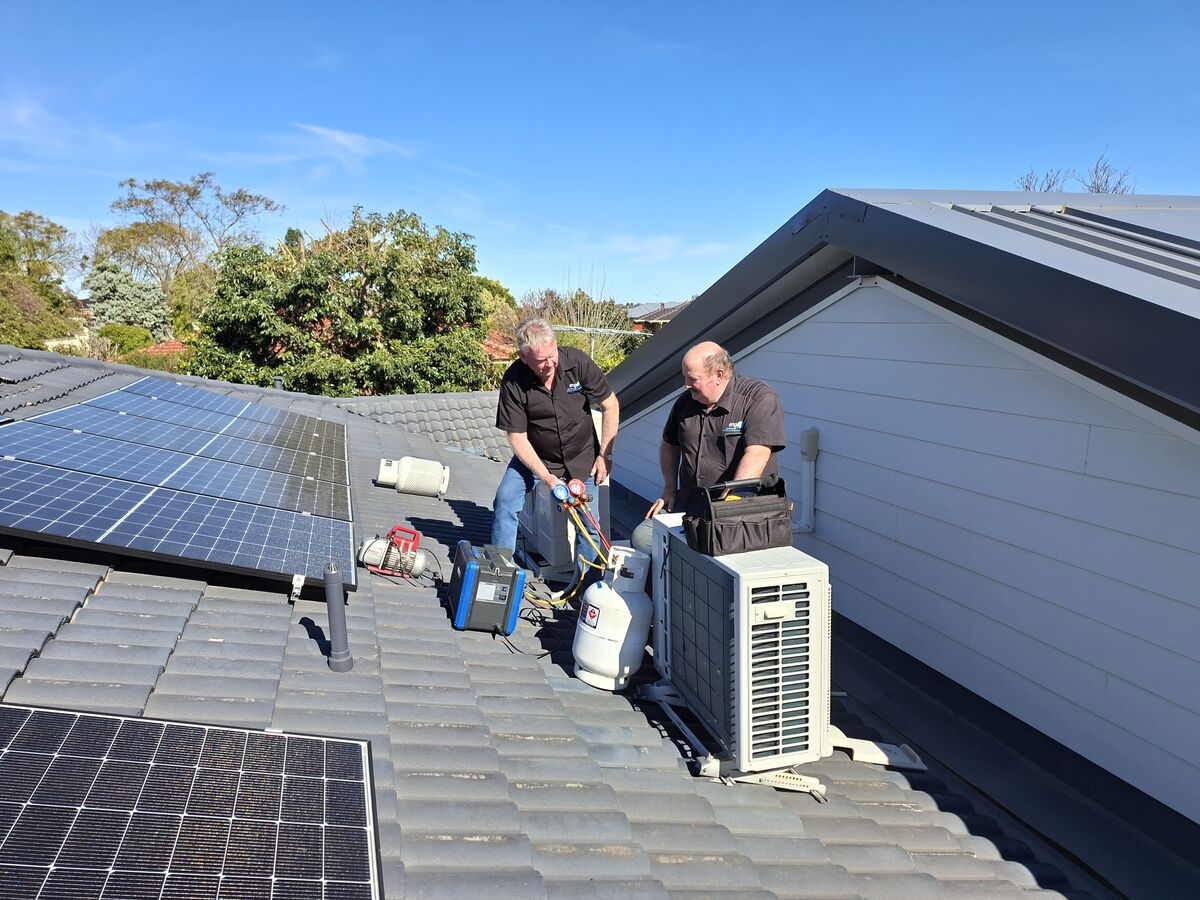
Choosing a natural blended hydrocarbon refrigerant is about more than just numbers; it is about choosing a safer, more sustainable future for Perth families. Our Retro-fit process is carried out by trained, qualified technicians to the highest standards, ensuring your Air-conditioner unit is safe, efficient, and ready for the years ahead.
The climate is changing, and as the evidence from CSIRO, the Bureau of Meteorology and the World Health Organisation shows, the case for acting at home has never been stronger. The technology to meet that challenge is already here. By choosing Engas, you are making a choice for quality, for honesty, and for the planet.
Ready to make the switch? Call Engas on 08 9300 2484 or book a free quotation to find out how a Retro-fit can improve your home's efficiency and reduce your environmental impact across both cooling and heating.
Sources
- [1] The Washington Post (Associated Press report), 2 November 1922, page 2. Original clipping shown above, sourced by an Engas representative.
- [2] CSIRO and Bureau of Meteorology, State of the Climate: Australia's Changing Climate. www.csiro.au/en/research/environmental-impacts/climate-change/State-of-the-Climate/Australias-Changing-Climate
- [3] Bureau of Meteorology, Climate Change in Australia. www.bom.gov.au/resources/learn-and-explore/climate-knowledge-centre/climate-change-in-australia
- [4] World Health Organisation, Climate Change and Health. www.who.int/news-room/fact-sheets/detail/climate-change-and-health
- [5] Australian Geographic, Is the latest climate report Australia's final wake-up call? (September 2025). www.australiangeographic.com.au/science-environment/2025/09/is-the-latest-climate-report-australias-final-wake-up-call/
- [6] The Conversation, Is this Australia's climate wake-up call? Official report reveals a hotter, harder future if we don't act now. theconversation.com/is-this-australias-climate-wake-up-call-official-report-reveals-a-hotter-harder-future-if-we-dont-act-now-256229
- [7] DCCEEW, consumer information on refrigerants in refrigeration and Air-conditioning. www.dcceew.gov.au/environment/protection/ozone/rac/consumers
- [8] DCCEEW, HFC phase-down frequently asked questions (26 September 2024). www.dcceew.gov.au/environment/protection/ozone/hfc-phase-down/hfc-phase-down-faqs
- [9] Engas, Technical Information. www.engas.com.au/technical
Book your free quotation
Find out how much you could save across both cooling and heating, with no obligation.
Book a free quotation